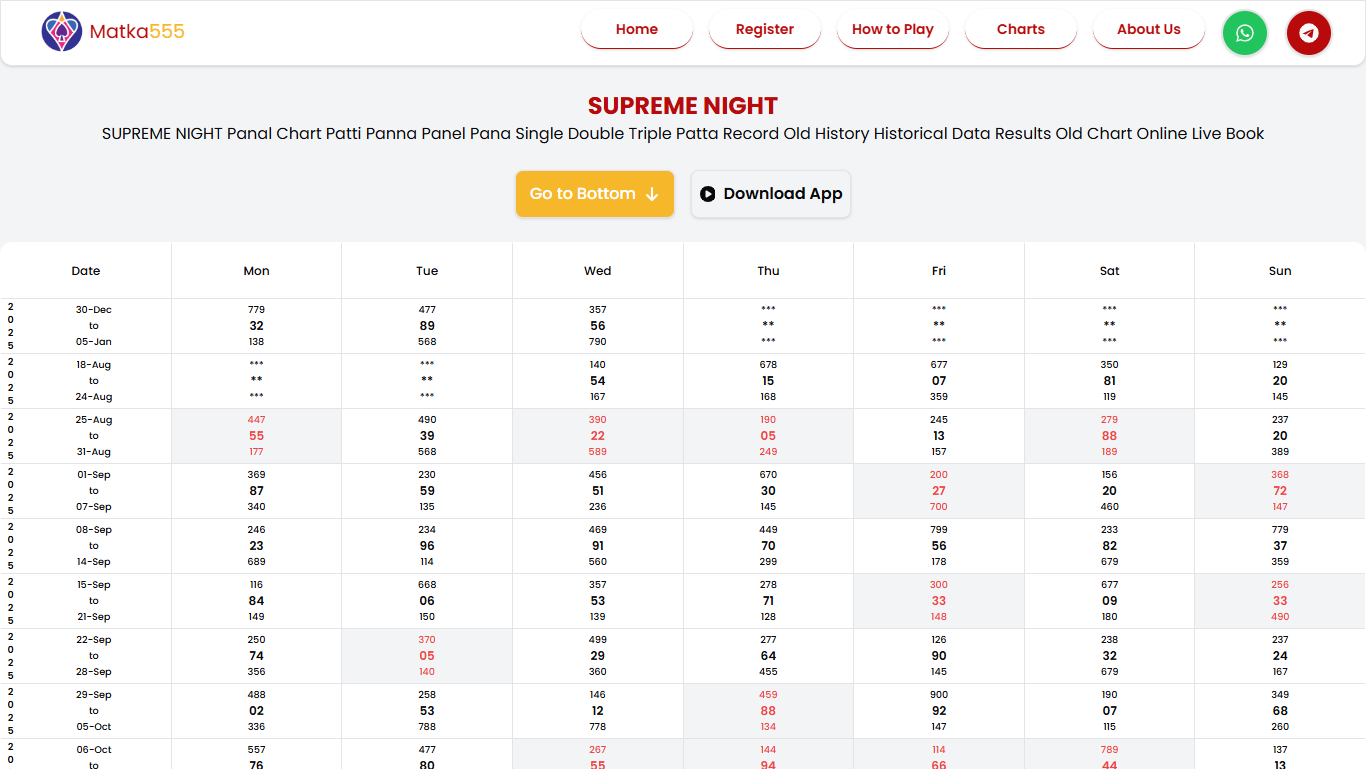
Supreme Night Matka charts are an important reference point for many matka followers who regularly check night results. These charts organize past outcomes in a structured format, making it easier to review historical data and observe how numbers have appeared over time.
This article explains how Supreme Night Matka charts are read, the meaning of night number formats, and the types of patterns people commonly notice—without promoting prediction or guessing.
What Is a Supreme Night Matka Chart?
A Supreme Night Matka chart is a historical record of nightly results. It displays previously declared outcomes in date-wise order so users can easily track past data.
Charts typically include:
- Date or day-wise entries
- Night result numbers
- Continuous sequences
- Weekly or monthly groupings
Once added, chart entries remain unchanged.
Understanding Night Number Formats
To read a chart correctly, it is important to understand the number formats used.
Single Digit
A one-digit number shown as part of the night result.
Jodi (Pair)
A two-digit number formed by combining two digits. Jodi numbers are commonly displayed in charts.
Patti / Panel
A three-digit number representing a detailed result format. Patti numbers are usually shown in separate columns or sections.
These formats exist only to display results clearly.
How to Read a Supreme Night Matka Chart
Reading a chart is simple and systematic:
- Start with the date column
- Move across to the night result
- Follow results in sequence
- Observe how numbers change day by day
Charts are designed to make historical review easy, not complex.
Common Patterns Observed in Night Charts
When reviewing supreme night matka charts, users often notice certain recurring observations. These are natural patterns, not fixed rules.
Repetition
The same number or digit appears multiple times over a short period.
Gaps
Some numbers may not appear for several days or weeks.
Sequences
Numbers may appear to move upward, downward, or alternate.
Mirror or Related Numbers
Digits that look or feel related may appear close together.
Such patterns occur naturally in random sequences.
Why Night Patterns Feel Significant
Night charts often feel more meaningful because:
- Fewer daily results make repetitions stand out
- Visual chart layouts highlight sequences
- Human perception naturally looks for order
This psychological effect can make random data appear intentional.
What Supreme Night Charts Actually Show
Charts are useful for:
- Viewing historical night results
- Verifying past outcomes
- Understanding result formats
- Maintaining record clarity
They do not:
- Predict future results
- Follow correction systems
- Respond to past outcomes
Each night result is independent.
Common Misinterpretations of Chart Analysis
Some misunderstandings include:
- Believing repeated numbers must continue
- Assuming missing numbers are “due”
- Treating patterns as reliable systems
These beliefs are based on perception, not facts.
Responsible Way to Use Night Chart Information
Supreme Night Matka chart information should be used for:
- General awareness
- Educational understanding
- Historical reference
- Result confirmation
Avoid using charts as decision-making tools.
Importance of Independent Outcomes
Every Supreme Night Matka result is:
- Generated independently
- Unaffected by previous days
- Not influenced by chart patterns
- Random in nature
Understanding independence prevents false expectations.
Conclusion
Supreme Night Matka chart analysis is best viewed as the process of reading and understanding historical night results. While repetitions, gaps, and sequences may appear, they are natural characteristics of random data and do not influence future outcomes.
By approaching night charts with clarity and awareness, readers can understand Supreme Night Matka information responsibly and realistically.
5 thoughts on “Supreme Night Matka Chart Analysis: Reading Night Numbers and Patterns”
Comments are closed.